
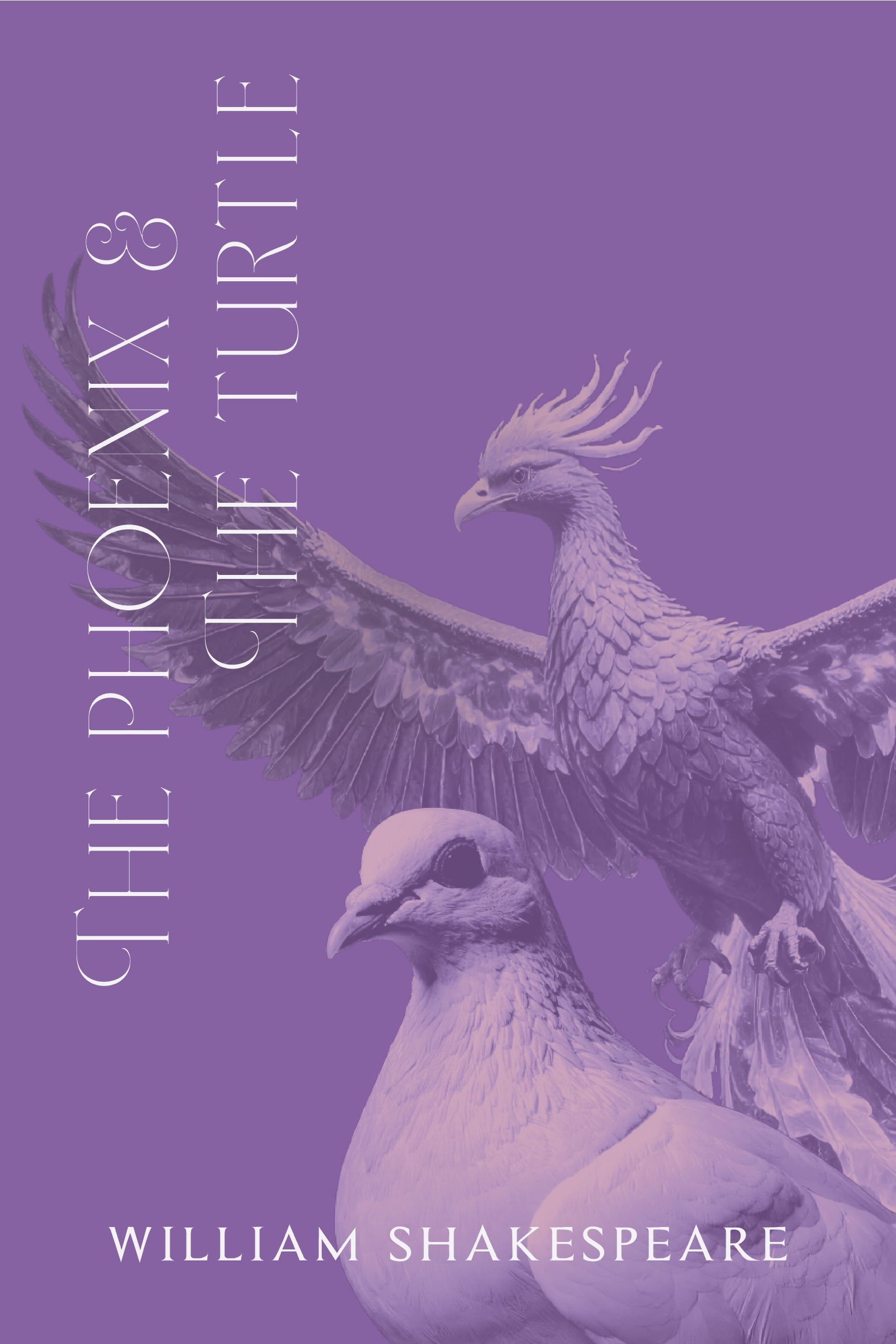
The Phoenix and the Turtle (Ebook)
Love so perfect it defies reason, death, and even itself.
William Shakespeare's The Phoenix and the Turtle is the most mysterious, metaphysically complex poem he ever wrote—a brief, enigmatic meditation on perfect love. In just 67 lines, Shakespeare creates an allegorical funeral for two legendary birds: the Phoenix, symbol of immortality and uniqueness, and the Turtle Dove, symbol of faithful love. Their union was so complete, so transcendent, that two became one without losing their individual selves—a paradox that defies logic and reason. When they die together, love itself seems to perish with them, leaving the world diminished. Written in stark, ceremonial language unlike Shakespeare's usual lush imagery, this philosophical poem reads like a metaphysical riddle about the nature of perfect union, whether in love, friendship, or spiritual communion. Scholars debate its meaning endlessly—is it allegory, tribute, theological meditation?—but readers simply feel its strange, haunting power: a celebration of love so pure and complete that its loss leaves an unbridgeable absence in the universe.